



Understanding Four-Prong vs. Six-Prong Engagement Rings
Prongs are a design element that’s unlikely to be top of your list when shopping for an engagement ring, but they can make a real difference. These prongs are the small metal claws that hold your centre stone in place, with four- and six-prong designs being the most popular.
Below, we’re sharing everything you need to know about four- and six-prong engagement rings to help you choose the right setting for your engagement ring.
What is the Difference Between Four-Prong vs. Six-Prong Settings?
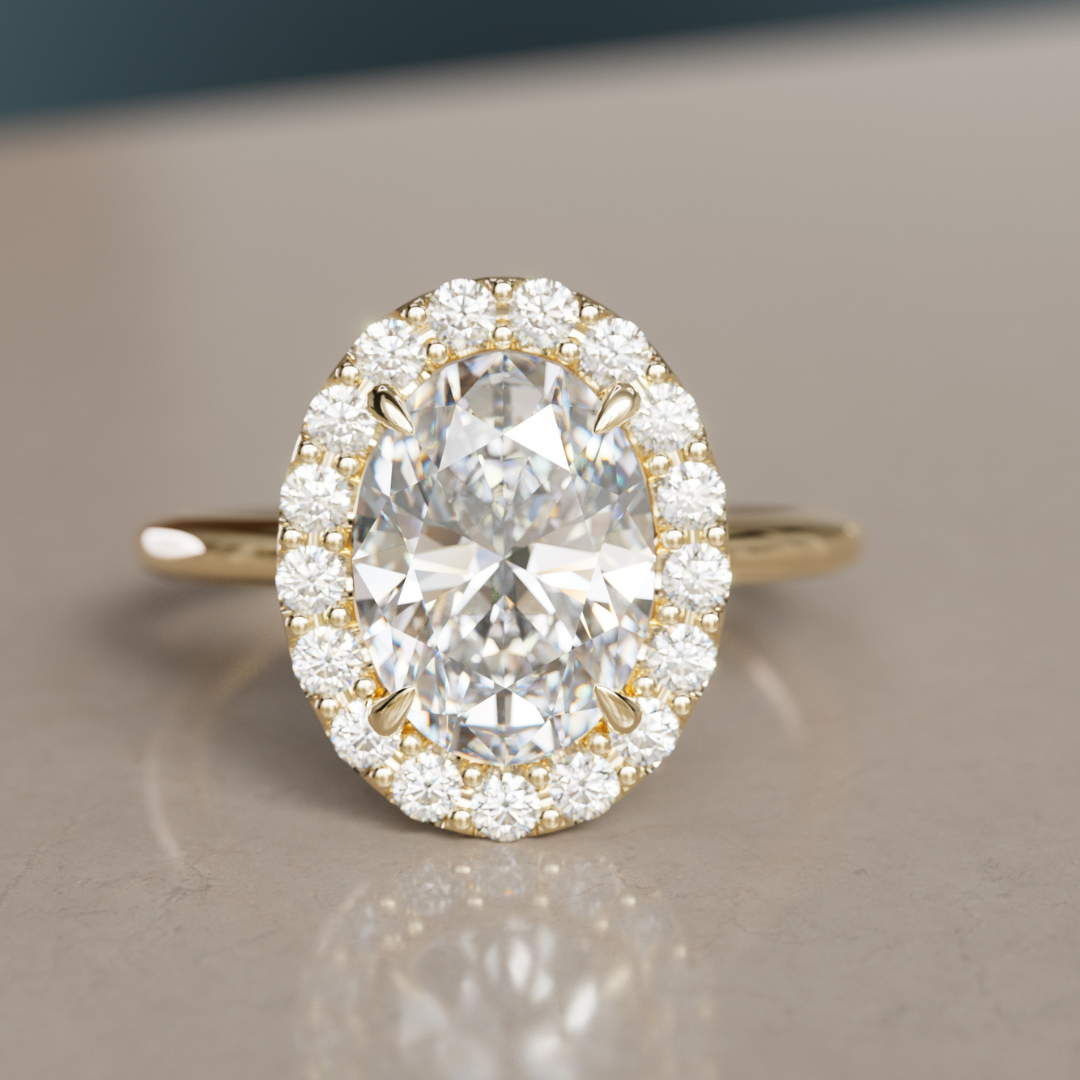
A four-prong engagement ring setting has four metal claws that hold the centre stone, leaving more of the stone’s outline visible to create a relatively open appearance. By comparison, a six-prong engagement ring setting uses six claws to hold the stone, creating a more enclosed frame that offers a classic look.
Both four- and six-prong settings are ideal for everyday wear when properly fitted and maintained. You can see the difference between four- vs. six-prong settings with our ‘Vera’ and ‘Nova’ engagement rings.
Four-Prong Engagement Rings: A Clean, Sleek Look

Four prongs allow for the stone’s outline to stay more exposed, which may be a better option if you want your centre stone to dominate your ring. This option gives your engagement ring a defined silhouette, with the corner placements of four prongs being ideal for square and rectangular stones.
A four-prong setting is also ideal for a sleek engagement ring, like our ‘Carissa’ three-stone ring with its clean silhouette. It’s worth noting that four prongs are generally less durable than a six-prong setting and may not be suitable for all gemstones.
Six-Prong Engagement Rings: Extra Durability

Six prongs are the perfect way to make your engagement ring more durable, as the claws can help to reinforce the gemstone, especially round stones. Six prongs provide more redundancy if one is damaged, protecting your centre stone, while still giving you the classic look of a traditional engagement ring, like our ‘Mira’ ring.
Choosing six prongs means that there is more metal sitting around your centre stone, which may change its visible outline. It’s also important to note that prongs may look more prominent on a smaller gemstone.
Which Setting is Right for Your Engagement Ring?
|
|
Four prongs |
Six prongs |
|
Overall appearance |
Open and minimal |
More enclosed and traditional |
|
Stone outline |
Can emphasize corners and defined shapes |
Often reinforces a round silhouette |
|
Support |
Four contact points |
Six contact points |
|
Design priority |
Shows more of the stone’s outline |
A classic frame with additional holding points |
The best choice of prongs will depend on the individual stone. While round brilliant stones will typically suit either option, fancy-shaped diamonds, such as pear and marquise stones, are usually best suited to a six-prong setting.
Shop Sustainable Engagement Rings at Valley Rose
At Valley Rose, our goal is to bring your dream engagement ring to life, whether it’s with a fully bespoke design or one of our pre-designed settings. Shop our range of four-prong and six-prong engagement rings or book a virtual consultation to start designing a custom engagement ring.
Popular posts
Share this
More from the blog
View all


Leave a comment